Vishrut Kinikar

The alleged persecution of Buddhists and destruction of stupas by Hindu rulers, termed “Brahmanical” by some academics, remains a contentious topic that has sparked endless debate. This allegation is often brought up in discussions regarding the reclamation of Hindu temples demolished under Islamic rule, and it is this article which attempts to uncover the historicity of these claims. This allegation is even extended at times to say that the decline of Buddhism in India was exclusively due to the resurgence of Vedic Hinduism. A historian Romila Thapar claims the following in her book A History of India, Vol 1: From Origins to 1300 AD: “The decline of Buddhism in the Ganges heartland and the peninsula occurred before the Turkish conquest.” A rebuttal to this comes from the Writings and Speeches of BR Ambedkar, where he states: “There can be no doubt that the fall of Buddhism in India was due to the invasions of the Musalmans. Islam came out as the enemy of the ‘But’. The word ‘But’ as everybody knows is an Arabic word and means an idol. Not many people however know what the derivation of the word ‘But’ is. ‘But’ is the Arabic corruption of Buddha.” The reasoning provided by Dr. Ambedkar regarding the origin of the word “But” and its connection to “Buddha”, along with its connection to the Islamic prohibition of idol worship reinforces the contention that the introduction of Islam in India had a role to play in the decline of Buddhism. The scope and extent to which Islamic proselytization caused the decline of Buddhism shall be analyzed in a future article. This article will analyze the influence of Hinduism on the decline of Buddhism. The notable “Brahmanical” rulers who are often cited as responsible for the ethnic cleansing of Buddhists are Pushyamitra Shunga, Mihirakula, and Shashanka of Gauda. This article will analyze these three figures in separate sections.
Pushyamitra Shunga

Pushyamitra Shunga was the founder of the Shunga dynasty, which he built from the remains of the Maurya dynasty after assassinating its last ruler Brihadratha in 185 BC. Pushyamitra was the army chief (Senapati) of Brihadratha prior to his coup d’état, and he was often known for his humility. This is because of the fact after Pushyamitra’s coronation as emperor of the Shunga dynasty, he still preferred to referred to as “Senapati” instead of other dignitaries such as “Maharaja” or “Samrata”. However, one major objection to his character is that he was responsible for the killing and persecution of Buddhists across India. The majority of these claims come from the Ashokavadana which is a Sanskrit Buddhist text eulogizing Emperor Ashoka of the Maurya empire. The Ashokavadana describes Pushyamitra as an enemy of Buddhism and a barbarian who engaged in mass beheadings of Buddhist monks. The Ashokavadana gives the following description of Pushyamitra:

A glaring historical inaccuracy of the Ashokavadana comes to light here. Pushyamitra is described here as the final Maurya emperor, in spite of the fact that Brihadratha was the final Maurya ruler and Pushyamitra founded the distinct Shunga dynasty. This inaccuracy gives historians an unfavorable impression of the Ashokavadana as a reliable historical source, but there is more to dive into.
More descriptions of Pushyamitra from this text are as follows:
“Then Pushyamitra, the king, said: ‘I will become famous by destroying the Buddhist religion.’ He set out with a large army and began to destroy monasteries and kill monks.”
“He went to Sakala and proclaimed: ‘Whoever brings me the head of a Buddhist monk shall receive a hundred dinars.’”
These descriptions are eerily reminiscent of the persecutions of Ajivikas and Nirgranthas by Maurya emperor Ashoka. The same Ashokavadana (as translated by Sujitkumar Mukhopadhyaya) gives the following descriptions of Ashoka’s earlier suppressive activities:
“At that time, an incident occurred which greatly enraged the king. A follower of the Nirgrantha (Mahavira) painted a picture, showing Buddha prostrating himself at the feet of the Nirgrantha. Ashoka ordered all the Ajivikas of Pundravardhana (North Bengal) to be killed. In one day, eighteen thousand Ajivikas lost their lives. A similar kind of incident took place in the town of Pataliputra. A man who painted such a picture was burnt alive with his family. It was announced that whoever would bring the king the head of a Nirgrantha would be rewarded with a dinara (a gold coin). As a result of this, thousands of Nirgranthas lost their lives.”
The allegation against Pushyamitra for rewarding dinaras for each head of a Buddhist can be seen to be almost a carbon copy of Ashoka’s rewards for executing Nirgranthas. One important thing to note is that the Ashokavadana is a Buddhist source dedicated to the life of Ashoka, therefore it is to be taken without a doubt that the intention of the text would be to portray a positive picture of Ashoka. However, despite that, the text gives descriptions of Ashoka’s negative deeds, making historians accept these accounts of Nirgrantha persecution by Ashoka to be largely true. However, the similarity of accounts of Pushyamitra’s persecution with that of Ashoka’s, coupled with the fact that the text portrays Pushyamitra as an enemy of the Buddhist faith, warrants further scrutiny. On this, the historian and Indologist Koenraad Elst claims the following: “Hagiographies are notorious for competitive copying (e.g. appropriating the miracle of a rival saint, multiplied by two or more, for one’s own hero); in this case, it may have taken the form of attributing a negative feat of the hero onto the rival.” Keeping this in mind, it is likely that the Buddhist author of the Ashokavadana replicated tales of Ashoka’s misdeeds into his narration of Pushyamitra, the supposed bloodthirsty foe of the Buddhist faith. Therefore, it is likely that due to the removal of state patronage the Buddhists enjoyed under the Mauryans by the Shungas, the miffed Buddhists exaggerated tales of Pushyamitra. It seems that the claims of Pushyamitra’s misdeeds hold much less credibility than that of Ashoka’s. Further corroboration of this conclusion comes from the claim by scholar Etienne Lamotte in his book History of Indian Buddhism: “To judge from the documents, Pushyamitra must be acquitted through lack of proof.”
Unfortunately, the allegations do not stop here. The alleged vandalism of the Sanchi Stupa built by Emperor Ashoka is also widely attributed to Pushyamitra Shunga, for which there seems to be no archaeological evidence. In fact, historical records show that the Sanchi Stupa flourished under Shunga rule. As attested by archaeology, vedikas and toranas (decorative gates) along with stone encasings were added to the Sanchi Stupa in lavish amounts and fashionable displays during the 1st century BCE, a time period corresponding to the end of Pushyamitra’s rule and the advent of Agnimitra’s rule. These facts suggest strong patronage from the Shunga Empire to the Sanchi Stupa, essentially nullifying claims of Pushyamitra’s vandalism. Even the Bharhut Stupa received strong patronage from Dhanabhuti, a vassal of the Shunga Empire. He was responsible for the structure’s Eastern Gateway, the most sacred portion of the Bharhut Stupa. Even a Prakrit inscription along the Eastern Gateway attests to this: “Toranam kāritam Vatsiputena Dhanabhutina” or “The gateway was caused to be made by Vatsiputra Dhanabhuti”. An additional inscription regarding this very torana is found saying “Suganam raje” meaning “during Shunga rule”. This again suggests strong patronage of Buddhism as opposed to persecution.
An additional reference from Malavikagnimitram, a Sanskrit play by Kalidasa, states that Pushyamitra’s son Agnimitra ruled the Vidisha region (present-day Madhya Pradesh) as its governor while Pushyamitra served as the emperor from Pataliputra. The Sanchi Stupa fell under Vidisha administration, giving a strong affable link between Agnimitra and the Sanchi Stupa, as shown by the decorations augmented as part of its structure during Shunga reign. The play further mentions a Buddhist parivrajika (female ascetic) named Bhagavati who visited Agnimitra’s court and served as a judge during a dance competition. The fact that Bhagavati served as a judge reflects the prestige Buddhist scholars often enjoyed in Shunga courts, as opposed to persecution or oppression of any sort. Even the Sri Lankan Pali chronicle Mahamvamsha describes various Buddhist monasteries in Shunga-ruled territory such as Bihar, Awadh, etc. during the rule of Sri Lankan king Dutagamunu. Dutagamunu ruled from 161 BCE to 137 BCE, which overlaps with Pushyamitra’s rule.
In light of these historical evidences, it can be seen that contrary to popular belief, Bauddha Dhamma bubbled with effervescence under the administration of the Shunga Empire, making it an example of religious tolerance avant la lettre. Therefore, Lamotte’s statement stands, suggesting that there is little to no evidence of Buddhists being suppressed by Pushyamitra.
Mihirakula
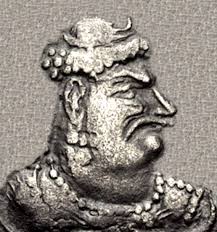
Another name which is oft-cited in discussions of Buddhist persecution is that of Mihirakula, a 6th century Hephthalite king who ruled much of northern India, northwestern India (present-day Pakistan), as well as parts of Central Asia. The Hephthalites were a subset of the Huns who hailed from Central Asia, and they are also referred to as the White Huns, especially in India where they were referred as the “Shweta-huna”. The Hephthalites invaded India and the first consolidation of their power came with Khingila, who ruled in the Gandhara region of northwestern India (present-day Afghanistan) in the early 5th century. The Hephthalites were involved in conflict with the Guptas, particularly the emperor Skandagupta during their invasive campaigns. With the decline of the Gupta empire, Khingila’s grandson Mihirakula carved out a massive empire governing most of northern India. Mihirakula was the Sanskritized version of his true Iranian-origin name which likely was connected to the Persian deity Mithra. Mihirakula is oft-mentioned in the Rajataringini, a Sanskrit chronicle by writer Kalhana about the history and genealogy of kings who ruled Kashmir. Mihirakula is additionally mentioned in the travel accounts of Chinese Buddhist pilgrim Song Yun as a barbarian who “does not believe in any religion”, which is contrary to those who claim he was a Hindu ruler. Song Yun’s statements are reinforced by another Chinese Buddhist monk Xuanzang in his travel log Datang Xiyuji (The Great Tang Dynasty Records on the Western Regions) where he states that Mihirakula was a barbarian who destroyed 1,600 Buddhist monasteries in Gandhara and either killed or sold into slavery 9,000 men. Xuanzang furthers goes on to explain the motives behind Mihirakula’s actions. Produced below is a portion of Samuel Beal’s translation of Xuanzang’s records which elucidates just this:
“…once desired to learn the Buddhist doctrine and sent to the sangha for a teacher. But the monks, fearing his cruelty, refused. Enraged by this insult, he turned against the religion, destroyed monasteries, and slaughtered monks.”
From this much, it is clear that Mihirakula was a barbaric foreign invader who due to his personal vendetta against Buddhist monks perpetrated atrocities against them.
Kalhana’s Rajataringini further states that Mihirakula was barbaric to all of his subjects, not only Buddhists. Shloka 289 of the Rajataringini is produced below as such:
“अथ म्लेच्छगणाकीर्णे मण्डले चन्द्रचेष्टितः तस्यात्मजोऽभून्मिहिरकुलः कालोपमो नृपः”
This translates as the following: “Then, in a region overrun by hordes of mlechhas (foreigners), where the moon’s motions had faltered, his son Mihirakula was born—a king like death himself.”
Kalhana’s use of the word “mlechha” meaning “foreigner” in Sanskrit along with his description of Mihirakula as a personification of death collectively show that Kalhana did not see Mihirakula as an Indian or a Hindu and saw him as a brutal barbarian. From the evidence thus far, it can be seen that Mihirakula was an irreligious foreign barbarian who displayed his brutality left and right. However, an objection to the irreligious character of Mihirakula comes from the historian Romila Thapar who puts forth the contention that Mihirakula was a Hindu ruler who had support from Brahmins due to land grants he gave them. Shloka 307 of the Rajataringini clears this up:
“अग्रहाराञ्जगृहिरे गान्धाराः ब्राह्मणास्ततः । समानशीलास्तस्यैव ध्रुवं तेपि द्विजाधमाः ॥”
This translates to: “Then, the Brahmins of Gandhara accepted the agrahāras, surely being of the same nature as him—those lowly twice-borns.”
Here, Kalhana, himself being a Brahmin, condemns those Brahmins of Gandhara who accepted agraharas (tax-free villages) from Mihirakula, and even refers to them as lowly people. This demonstrates that despite a few Brahmins who took land grants from the barbaric Mihirakula due to their self-interests, Brahmins were generally opposed to Mihirakula, showing he did not have the support of most Hindus, making it most probable that he was irreligious. This reference also dismantles claims of any “Brahmanical intolerance” against Buddhism.
Phrasing myself on Lamotte’s lines, Mihirakula must be convicted through abundance of proof. However, this conviction lies not only in the massacre of Buddhists, but tyranny and oppression of Indians subcontinent-wide.
Shashanka of Gauda
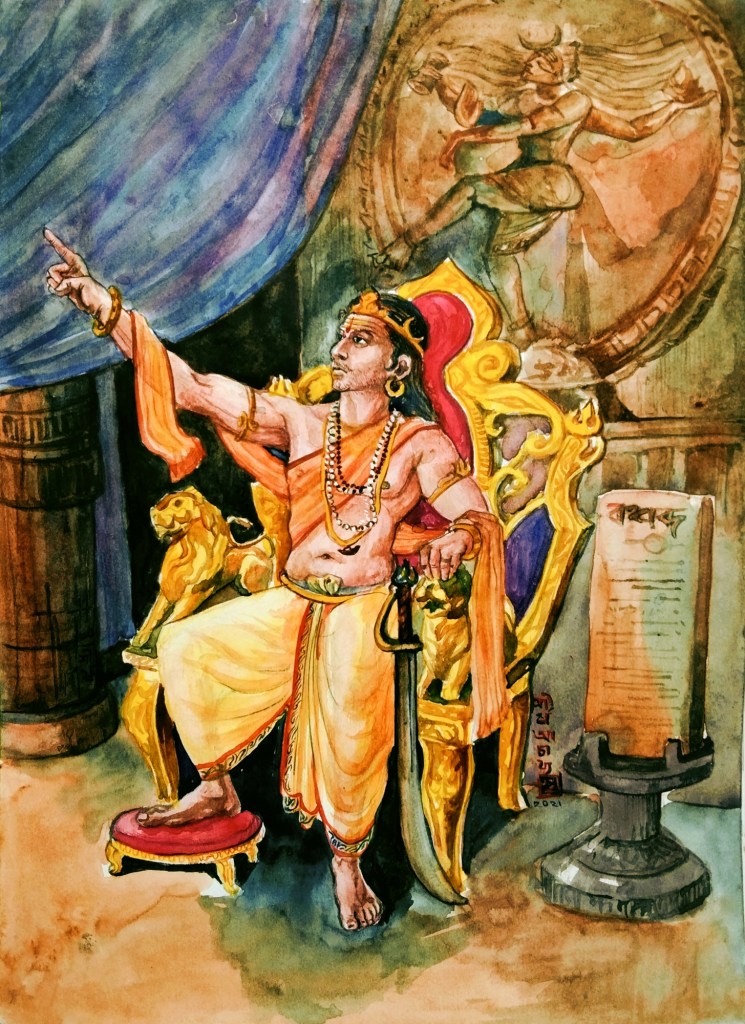
Shashanka of Gauda, a 7th century Shaivite Hindu king who ruled over much of eastern India, has a notorious reputation in the memory of Buddhist monks for being a suppressor of Buddhism. Shashanka is often accused for chopping down the sacred Bodhi tree under which Gautama Buddha attained enlightenment. This accusation is found in Xuanzang’s Datang Xiyuji. Page 216 of Li Rongxi’s translation of Xuanzang’s record states the following:
“Recently King Sasànka, a heretical believer, denounced the buddhadharma out of jealousy, destroyed monasteries, and cut down the bodhi tree [again]. He dug the ground so deep as to reach spring water but he could not get at the ends of the roots, so he set fire to burn it and soaked it with sugarcane juice with the intention of making it rotten and prevent it from sprouting. Several months later, King Pürnavarman (known as Manzhou, “Full Armor,” in Chinese) of Magadha, the last descendant of King Asoka, heard about the event and said with a sigh of regret, ‘The Sun of Wisdom has sunk and only the Buddha’s tree remained in the world; now that the tree has been destroyed what else is there for living beings to see?’ He prostrated himself on the ground and wept piteously. He watered the tree with milk obtained from several thousand cows and it grew up to some ten feet high in one night.”
Here, “heretical” refers to non-Buddhist Indic schools of thought as opposed to an exclusivist or derogatory label. The quote explains Shashanka’s shameful act of the Bodhi tree’s desecration in meticulous detail, along with explaining Purvavarman’s efforts to revive the tree. The reference to the tree being watered with milk and growing ten feet high is highly dubious as no tree has the capability of growing ten feet overnight. Therefore, the reference of the tree’s revival is most likely either a hyperbole or a mythologized account. However, it has been established thus far that Shashanka was a vile and oppressive tyrant who desecrated the places of worship of Buddhists. In historical discourse, this one reference from Xuanzang is often cited as evidence of widespread and systematic Hindu “Brahmanical” persecution of Buddhism, but what Xuanzang says shortly afterwards suggests the contrary. Xuanzang explains the presence of a beautiful shrine to the east of the Bodhi tree and narrates its history on page 218 as follows:
“Formerly King Asoka built a small shrine at the site of the [present] shrine and a brahman later extended it. There was once a brahman who did not believe in the buddha-dharma but worshiped the deity Mahesvara. He heard that the deity was living in the Snow Mountains, so he went with his younger brother to seek the fulfillment of his wishes from the deity. The deity said, ‘Your wishes can be fulfilled only when you have done meritorious deeds. It is not that you can get things by merely saying prayers, nor can I make you satisfied.’ The brahman said, ‘What meritorious deed should I do so that my mind can be satisfied?’ The deity said, ‘If you wish to plant the seed of goodness you should find the field of blessedness. The bodhi tree is the place where the Buddha attained buddhahood, so you should quickly go back to the bodhi tree and build a great shrine, dig out a large pond, and make various offerings. Then your wishes will be fulfilled.’ Under the deity’s injunction the brahman, cherishing a mind of great faith, returned with his younger brother. The elder one built the shrine and the younger one excavated the pond. Then they made rich offerings to seek the fulfillment of their wishes.”
This one reference altogether nullifies any claim of “Brahmanical” animosity towards Buddhism. A Brahmin devotee who “did not believe in the buddhadharma” is seen building the holiest of Buddhist shrines (this one being the precursor of the Mahabodhi temple) under the command of Maheshwara (Shiva), who is a Hindu Vedic deity, or a “Brahmanical” deity in the parlance of some historians. A Vedic “Brahmanical” deity being described as commanding a Brahmin to build a Buddhist shrine as a saintly act thoroughly dismantles the contention that Hindus viewed Buddhism with contempt and condescension. More evidence of Hindu-Buddhist unity is found on pages 219-220:
“When King Sasanka felled the bodhi tree he also wished to destroy this image. But when he looked at the compassionate features of the image he did not have the heart to do so. On returning home he told his attendant minister, ‘You should remove this image of the Buddha and replace it with that of Mahesvara.’ Having received the king’s edict, the attendant minister was afraid and said with a sigh, ‘If I destroy the Buddha’s image I will suffer disaster for many kalpas, but if I disobey the king’s order I will not only lose my own life but also bring about the extermination of my entire family. What should I do in this awkward plight?’ He then called some Buddhist believers to work as his servants and had them build a brick wall in front of the Buddha’s image. Because he was ashamed to see the image in utter darkness he lit a lamp for it. On the front of the brick wall he drew a picture of Mahesvara. When this was done he made a report to the king. On hearing the report the king dreaded the consequences. He suffered from blisters all over his body, his skin became cracked, and before long he died. The attendant minister hurriedly went back to the image and demolished the brick wall [that screened it from view]. Though many days had passed the lamp still burned, without extinction. The image is still in existence and because it is in a deep inner chamber lamps and torches burn continually.”
The account describes yet another vile act of desecration by Shashanka, but a rather heartfelt act of preservation by his minister. Although the minister’s religion is not specifically mentioned, it is more than likely that he was a Hindu because he worked under the regime of Shashanka, who had a visceral hatred for Buddhists, along with the fact the text mentions him commanding “Buddhist believers” to build a wall, implying a contrast in religious beliefs between the builders of the wall and the minister. Although the minister was a Hindu who worked for Shashanka, he believed that the removal of Buddha’s image was a grave sin which would stay with him for kalpas, or eons, again suggesting the inseparable nature of Hindus and Buddhists. The text goes on to mention how lovingly and carefully the minister preserved the image of the Buddha, even restoring it after the death of Shashanka. In spite of Shashanka’s actions, an overwhelming number of Hindus actively respected the Buddhist religion as their own, debunking the notion of any “Brahmanical” divide.
Conclusion
The fact of the matter is that although there were radical rulers in rare instances such as Shashanka who committed shameful acts of desecration against the Buddhist religion and although there were periods of political conflict between Hindu and Buddhist kings, Vaidik Dharma and Bauddha Dhamma never lost their sense of affinity and co-religionism. To assume that Hindus and Buddhist viscerally hated one another by looking at certain historical instances of strife is erroneous, as one essentially ignores the millennia of esprit de corps between the followers of both sects of the Indic civilization. Pushyamitra patronized Buddhism, Mihirakula was not even a Hindu, and Shashanka was a tyrant. The Buddhist faith did not decline as a result of the Hindus. In fact, it was the Islamic invasions of India which caused the destruction of Buddhism as Ambedkar rightly pointed out, the destruction of Mahabodhi and Nalanda by Bakhtiyar Khilji being notable examples. As elucidated by Pushyamitra through his acts of patronage to the Buddhist stupas, the respect Xuanzang offered the Vedas in his accounts, the Brahmin who patronized Buddhist shrines as his own, and the minister who kept the Buddha’s lamp burning eternally, Vaidik Dharma and Bauddha Dhamma are two sides of the same coin, inseparable and cognate.


Thank you for this well-researched and nuanced post. I often reflect on how layered our subcontinent’s history is, and how easy it is to reduce complex spiritual and political shifts to singular narratives. Your approach, especially in distinguishing individual rulers from entire traditions, really stood out.
I’ve explored similar intersections in my own writing around Hindu mythology and how we often blur historical record with ideological retellings. Would love to hear more from you on where you think the Buddhism–Hinduism relationship is headed in public discourse today.
LikeLike
Thank you very much Nehal! The subcontinent’s history is indeed layered and I am glad you enjoyed reading my article. I wish you success in your writing as well!
LikeLiked by 1 person
Thank you so much! That means a lot to me. Truly admire how you wove depth into something so readable! Would love to stay in touch and keep learning from your work. Wishing you continued inspiration too! 🙏🏼
LikeLike