Vishrut Kinikar
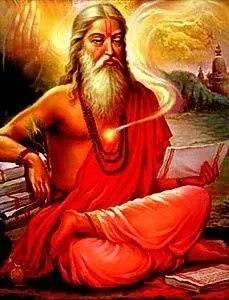
In this article, I would like to cover the achievements of great scientists of our ancient culture, whose contributions not only helped shape a significant foundation of all areas of science, but had also enabled Bharat to become a top exporter of knowledge and culture.
To digress a little, it is unfortunate and deeply depressing that these historical facts are suppressed in the name of “modernity”, which is merely a misleading euphemism for secularized Eurocentric coloniality (i.e. colonial mindset). It is also deeply depressing that much of the information on the subject of the heritage of ancient India is sidelined due to it being “anti-modern”. These reactions are also purely colonial in nature. It is a common assumption that the West developed all sorts of “modernity”, “practicality”, “science” and lifted the Indians from their “regressive ways of life”, “orthodoxy”, “superstition”, and “lack of intelligence” giving them a new perspective of the world. This is a classic example of coloniality (i.e. colonial mindset) that is embedded in all of us as a result of the brainwashing done to us by the European colonizers. This colonial viewpoint is certainly false as Bharatiyas had been systematically doing science since millennia much before the Europeans even established their civilizations. It is deeply depressing that these great facts are not taught to children (or even adults for that matter) in the “modern” colonial education system in place in Bharat nowadays, which sadly continues to spread and instill colonial mindsets in children from a very young age. I will talk about this in much greater detail in a different article on coloniality later. I have included this information here to assuage the coloniality-induced scepticism one may have with regards to the scientific history of Bharat and to encourage that one should read this with an open mind.
Scientific Inquiry In Ancient Bharat
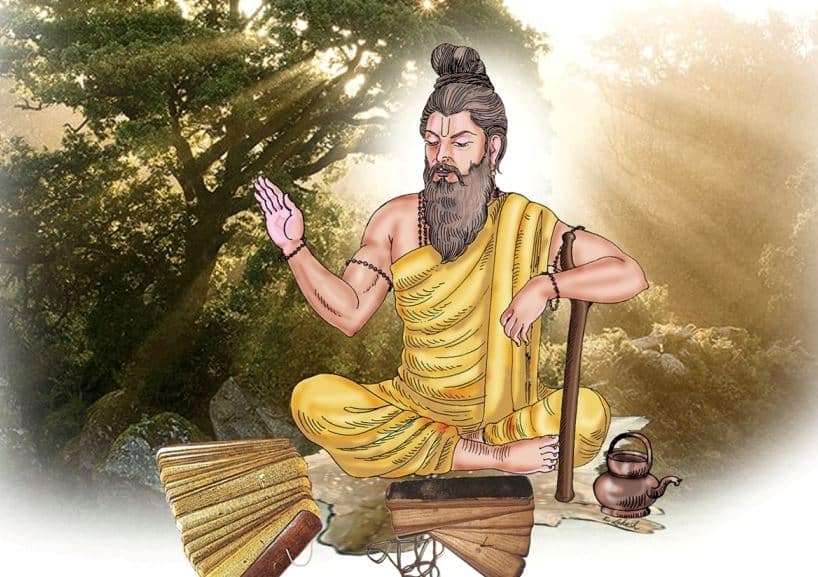
Returning to the topic at hand, it is a common assumption that there was no method of scientific inquiry in ancient Bharat, and that these forms of logic and pragmatic methods were all developed in the “modern” West. However, this is certainly not the case as we will see. I would first like to briefly cover the methods of scientific inquiry used in ancient Bharat. In Sanatana Dharma, there are six schools, namely Nyaya, Samkhya, Uttara and Purva Mimasa (these both are collectively known as Vedanta), Vaisheshika, and Yoga. The school I will talk about is Nyaya. The Nyaya school of thought was founded by Rishi Gautam (not to be confused with Gautam Buddha) and was concerned with logic, methodology, ontology, experiment, and epistemology. According to the Nyaya school, there are three ingredients that constitute a logical and pragmatic methodology of scientific inquiry.
- Vijnan-Buddhi (Scientific Acumen)
Scientific Acumen or Vijnan-Buddhi requires a proper method and sequence to scientific inquiry along with objectivity, all three of which are essential to make good decisions and assumptions.
2. Tarka-Shastra (Logical Reasoning)
Logical Reasoning or Tarka-Shastra requires a proper toolkit of background knowledge, consistency, logic, and the taking into account of basic agreements (i.e. axioms).
3. Tantra-Yukti (Ingenuity)
Tantra-Yukti or Ingenuity requires the method of scientific inquiry to be practical and pragmatic, have a great degree of precession and accuracy, along with the overcoming of or making use of limitations creatively.
The Nyaya-Darshan gives a great deal of emphasis on objectivity and mandates that one must have evidence to make an argument. For example, in Nyaydarshan 4:2:30, it is written “प्रमाणानुपपत्त्युपपत्तिभ्याम्” meaning “Absence of evidence does not prove nor disprove anything”. Sage Patanjali, the founder of the Yoga school, writes in his Yogasutra, Samadhipada 7, “प्रत्यक्षानुमानागमाः प्रमाणानि।” which describes the steps for scientific inquiry. According to this ancient deductive method of scientific inquiry formulated by Sage Patanjali, it is crucial for us to define our hypothesis in the context of an existing theory and background knowledge, where we do objective testing and gather evidence, after which we are free to reject or accept our hypothesis. This shloka begins with the word “प्रत्यक्ष” meaning “objective testing”, the second word given is “अनुमान” which means “claim/prediction”, after which we have the word “आगमः” meaning “background knowledge”, after which we have the word “प्रमाणानि” meaning “evidence”. In fact, the philosopher Karl Popper also gave the same method of deductive reasoning as Sage Patanjali. Next, Sage Patanjali makes a very important statement. He writes “विपर्ययो मिथ्याज्ञानमतद्रूपप्रतिष्ठम्”This means “Anything contrary to this (i.e. the scientific process explained previously) is automatically established as false knowledge.” Even our ancestors believed that inductive reasoning was not the correct method of scientific progress.
All of this taken into account, constitutes the very definition of scientific inquiry and rationale. It thus refutes the claim that ancient Bharatiyas did not have logical methods of scientific inquiry and that Westerners introduced the scientific frameworks.
Aryabhata
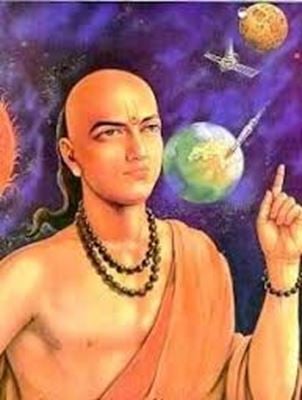
Aryabhata was a very famous ancient Bharatiya mathematician, astronomer, and astrophysicist who was born in Pataliputra (present-day Patna) during the reign of the Gupta empire in the 5th century. A mathematical and scientific treatise named Aryabhatiya was authored by Aryabhata during that time and a number of great mathematical and astronomical findings and systems are described in this scripture. In the Aryabhatiya, Aryabhata devised a system for representing numbers using Devanagari alphabets. This is system is similar to the Katapayadi system and was used for representing numbers, and writing mathematical formulas. The Katapayadi system is also widely used in Kerala and uses Malayalam letters rather than Devanagari letters. Returning to the topic, in this system, each vowel was ten times the previous vowel.
In other words, अ = 10, आ = 100, इ = 1000, ई = 10000, and so on.
As for consonants, क = 1, ख = 2, ग =3, घ = 4, ङ = 5, च = 6, छ = 7, ज = 8, झ = 9, ञ = 10, ट = 11, ठ = 12, ड = 13, ढ = 14, ण = 15, त = 16, थ = 17, द = 18, ध = 19, न = 20, प = 21, फ = 22, ब = 23, भ = 24, म = 25.
Now, it becomes different, and goes by tens.
य = 30, र = 40, ल = 50, व = 60, श = 70, ष = 80, स = 90, ह = 100.
I will use an example word to show how the system used by Aryabhata works. Suppose I have the word खिचडी, and that the word is encoded in the Aryabhatiya system to represent a certain number. To figure out the number that खिचडी represents, we must go one alphabet at a time. Our first letter is खि, we know that ख = 2 and इ = 1000, so when we have a consonant fixed to a vowel like this, we multiply both numbers, so from this we have खि = 2000. The next letter is च, which we know equals 3. Finally, we have डी. ड = 13 and ई = 10000. We multiply both numbers like we did with खि, to obtain 130000. We have three numbers, 2000, 3, and 130000, which when added together equal 132003. Hence, the word खिचडी = 132003 (one lakh, thirty-two thousand, three) in the Aryabhatiya system.
You may be mind-blown by this system, but there is something that is even more astonishing.
We have this following mantra about Lord Krishna:
गोपीभाग्य मधुव्रातः श्रुंगशोदधि संधिगः |
खलजीवितखाताव गलहाला रसंधरः
If the Katapayadi system is used on this mantra, then this mantra equals the exact value of pi up to 30 decimal places multiplied by one nonillion (this is because there is no decimal point or any such symbol between गो and पी).
This might be incredibly astounding to all of you, but I will reveal even more breathtaking facts about Bharatiya science later on.
Returning to the topic of Aryabhata, in the 10th shloka of the Ganita Pada of the Aryabhatiya, it is written: “चतुरधिकं शतमष्टगुणां द्वाषष्टिस्तथा सहस्राणाम अयुतद्वय विष्कम्बस्यासन्नो वृत्तपरिणाहः।”
This translates to: “100 added to 4, multiplied by 8 and added to 62000: this is the approximate circumference of a circle whose diameter is 20000.”
This can be checked by dividing 62832 by 20000 and seeing if it equals a number close to pi (since the shloka states that it is the approximate circumference). When we do so, we obtain 3.1416, which makes sense, because as said earlier, the shloka states that the circumference is approximate.
He has also given the formula for area of a circle. In the 7th shloka of Ganita Pada of Aryabhatiya, he states “समपारिणाहस्यार्द्धं विष्कम्भार्धहतमेव वृत्तफलम्”, meaning “half of the circumference multiplied by half of diameter exactly gives the area of the circle.”
Additionally, the 14th century mathematician Madhava of Sangamagrama gave an infinite series of pi as 4(1-1/3+1/5-1/7+1/9….) and this is described in his shloka “व्यासे वारिधिनिहते रूपहृते व्याससागराभिहते त्रिशरादिविषमसङ्खा भक्तमृणं स्वं पृथक् क्रमात् कुर्यात्”
Now, I will move onto the references from Aryabhatiya describes the formula t = d/r which we all now and have learned in school. If you ask your schoolteachers, professors, or read your textbooks, you will learn that Galileo Galilei founded the branch of kinematics and described this in his book in 1638, titled “Two New Sciences”. However, kinematics was described in Aryabhatiya almost 1100 years before. The 31st shloka of the second chapter of Aryabhatiya states “भक्ते विलोमविवरे गतियोगेनानुलोमविवरे द्वौ गत्यन्तरेणा लब्धौ द्वियोगकालावतीतैष्यौ।”, which means “Divide the distance between two bodies moving in the opposite directions by the sum of their speeds, and the divide the distance between the two bodies moving in the same direction by the difference in their speeds; the two quotients will give the time elapsed since the two bodies met or to elapse before they will meet.” It is clear without any doubt that Aryabhata is describing the formula t = d/r and that he had a firm understanding of relative motion and velocity.
Brahmagupta
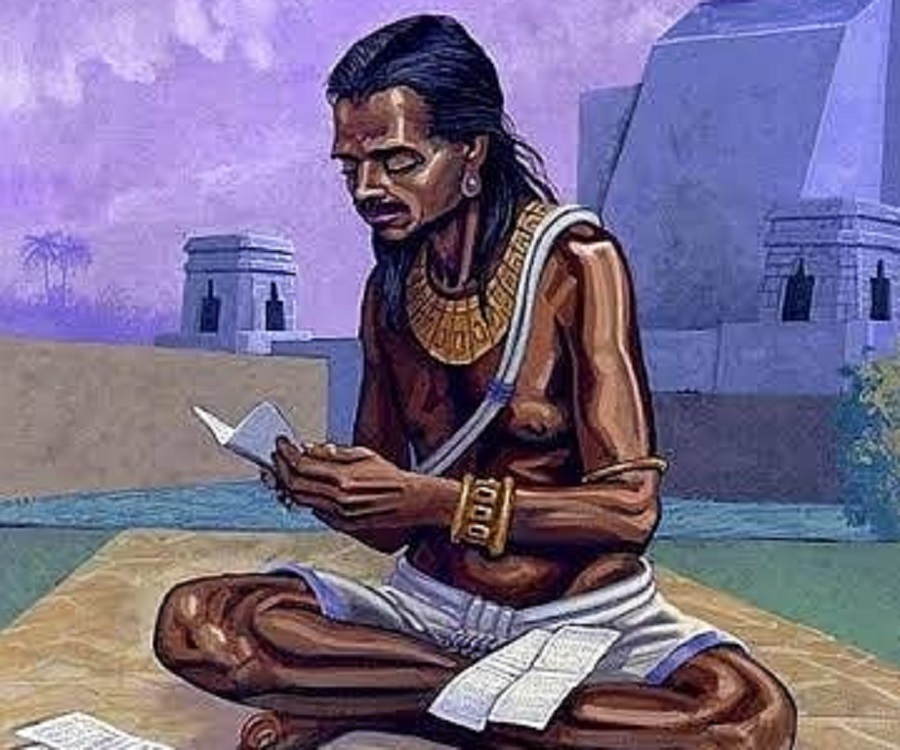
Brahmagupta is also a great Bharatiya mathematician of the 7th century who in his various treatises described properties of zero, positive and negative numbers, equations, and geometry. Brahmagupta in his treatise Brahmasphutasiddhanta describes the basic properties of arithmetic. He describes the identity property of addition and the zero property of multiplication. He does this by stating:
“When zero is added to a number or subtracted from a number, the number remains unchanged; and a number multiplied by zero becomes zero.“
He also describes the following properties of positive and negative numbers. He calls positive numbers as “fortunes” and negative numbers as “debts”.
A debt minus zero is a debt.
A fortune minus zero is a fortune.
Zero minus zero is a zero.
A debt subtracted from zero is a fortune.
A fortune subtracted from zero is a debt.
The product of zero multiplied by a debt or fortune is zero.
The product of zero multiplied by zero is zero.
The product or quotient of two fortunes is one fortune.
The product or quotient of two debts is one fortune.
The product or quotient of a debt and a fortune is a debt.
The product or quotient of a fortune and a debt is a debt.
Then he describes the following properties of zero:
Positive or negative numbers when divided by zero is a fraction the zero as denominator.
Zero divided by negative or positive numbers is either zero or is expressed as a fraction with zero as numerator and the finite quantity as denominator.
Zero divided by zero is zero.
Brahmagupta is correct in all of the properties he has described except that where he states that zero divided by zero is zero.
However, this one small mistake he made does not render the rest of his fabulous work as useless.
There were also example problems given in the Brahmasphutasiddhanta, such as the one below:
“Five hundred drammas were loaned at an unknown rate of interest, The interest on the money for four months was loaned to another at the same rate of interest and amounted in ten months to 78 drammas. What is the interest rate?.”
See if you can solve it.
Brahmagupta additionally gave the formula for the area of a cyclic quadrilateral (i.e. a quadrilateral inscribed in a circle, the four vertices of which touch the circle) as the square root of (s-a)(s-b)(s-c)(s-d) with s being the semi-perimeter (half of perimeter) and a, b, c, and d being the four sides of the quadrilateral. Fortunately, this formula is still known as the Brahmagupta Formula and is not named after a foreign mathematician.
Brahmagupta also gave the formula for the sum of the squares and the cubes of the first n natural numbers. The formula he gave for the sum of the squares of the first n natural numbers is 1/6n(n+1)(2n+1) and the formula he gave for the sum of the cubes of the first n natural numbers as (1/2n(n+1))2. We know that these formula are true as they are the very same formulae used nowadays to find the sum of squares of first n natural numbers and the sum of cubes of first n natural numbers, respectively. The formula used to find the sum of squares of the first n natural numbers is n(n+1)(2n+1)/6 which is obviously the same formula as was given by Brahmagupta. The formula for finding sum of cubes of first n numbers is [n2(n+1)22]/4 which is also the same formula as what is given by Brahmagupta as (1/2n)2 equals 1/4n2 due to which Brahmagupta’s formula is otherwise represented as n2(n+1)2/4.
Surya Siddhanta
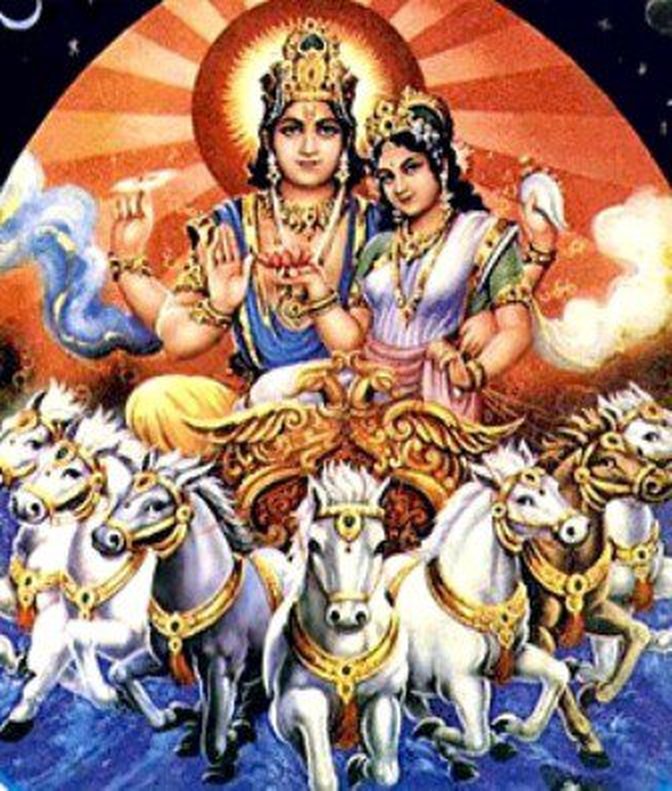
Believe it or not, the oldest astronomical text comes from India! Both the Aryabhatiya and the Brahmasphutasiddhanta also talk about astronomy and not just mathematics. They talk about the longitudes of planets, the respective distances from Earth to the planets, positional astronomy, mathematical astronomy, eclipses, conjunctions, the celestial sphere, the path of planets throughout the celestial equator, etc. In fact, Aryabhatiya draws a great deal of information from the Surya Siddhanta. The Surya Siddhanta is a Vedic text on astronomy and its contents are mesmerizing. The Surya Siddhanta is the oldest scripture on astronomy known to man. The original author of this scripture was named Mayasura and he is believed to have received all this knowledge of astronomy from Lord Surya, the sun god himself, the words of whom Mayasura wrote down and named “Surya Siddhanta”. The Surya Siddhanta is a body of very sophisticated astronomical and mathematical calculations which you must be an expert in astronomy to even understand. The Surya Siddhanta contains 14 chapters, each of which is centered on a specific topic.
The first chapter is about the mean motion of planets, division of time, measurement of yugas, revolutions, aharganas, conjunction and node of apsis for planets etc.
The second chapter discusses in detail about the true motion of the planets, types of motions, determination of sines in the zodiac, declination and the calculations surrounding it, determination of the circumference of a planet, corrected positions of planets, corrected motion, latitude, length of day ands night, constellations, portions and halves of lunar days (tithi) etc.
Chapter 3 is centered around direction, place, time, determining east-west meridian, part of solstice, equinoctial shadow, sines of co-latitudes, zenith and its relative distances, amplitude, cones, points upon the ecliptic, and meridian-ecliptic points.
Chapter 4, eclipses, corrected longitude of moon, measure of sun and shadow, obscuration, half-duration of eclipse, corrected perpendiculars, and degrees of deflection.
Chapter 5: Parallax (deflection of light) in solar eclipses, parallax in latitude and longitude of heavenly bodies (particularly the Moon).
Chapter 6 dissects and analyzes the science behind projection of eclipses.
Chapter 7 discusses planetary conjunctions, discs of planets, and viewing of the planets.
Chapter 8 discusses the positions of constellations and planet-constellation conjunctions.
Chapter 9 concerns heliacal rising and setting, determination of portions of time.
Chapter 10 discusses the rising and setting of the Moon and the elevation of the lunar cusps.
Chapter 11 briefly goes into the realm of astrology and discusses the malignant aspects of the Sun and the Moon and technicalities in the field.
Chapter 12 goes into tremendous detail of cosmogony, geography of the universe, dimensions of universal creation, pole star, distance from Earth, and spiritual science.
Chapter 13 thoroughly describes the advanced instruments used in astronomy, how to properly construct them, and how to build an astronomical observatory.
Chapter 14, the final chapter, is a detailed list of the properties of time division, modes of perceiving time, and units of time (both minute and enormous).
Taking all of this into account, it can be clearly seen that the Surya Siddhanta is a very advanced astronomical text in which one needs tremendous proficiency and expertise in mathematics and astronomy to even begin to understand it.
In the Surya Siddhanta, there are units of time given (incredibly big and small alike). We all know the enormous time lengths of Yuga, Chaturyuga, Manvantara, Kalpa, and century of Brahma, but we have not heard of the small time units. These are given in the Surya Siddhanta and I will describe them here. According to the Surya Siddhanta, time is of two types, finite and infinite. Finite time is further divided into real and unreal time. The time which can be quantitatively measured is called real or murta time and is measured in pranas, and time that is so instantaneous that cannot be measured quantitatively is known as unreal or amurta time, and is described in truti. 1 prana (unit used to measure real time) is equal to 4 seconds, and 6 pranas (24 seconds) constitutes one vinaari, and 60 vinaari (1440 seconds) makes one naari. Truti, on the another hand, is a unit used to describe unreal time and is equal to 1/33750 seconds. The Surya Siddhanta also goes further in measuring that 60 naaris constitute one sidereal day (ahoratra).
Rishi Kanada
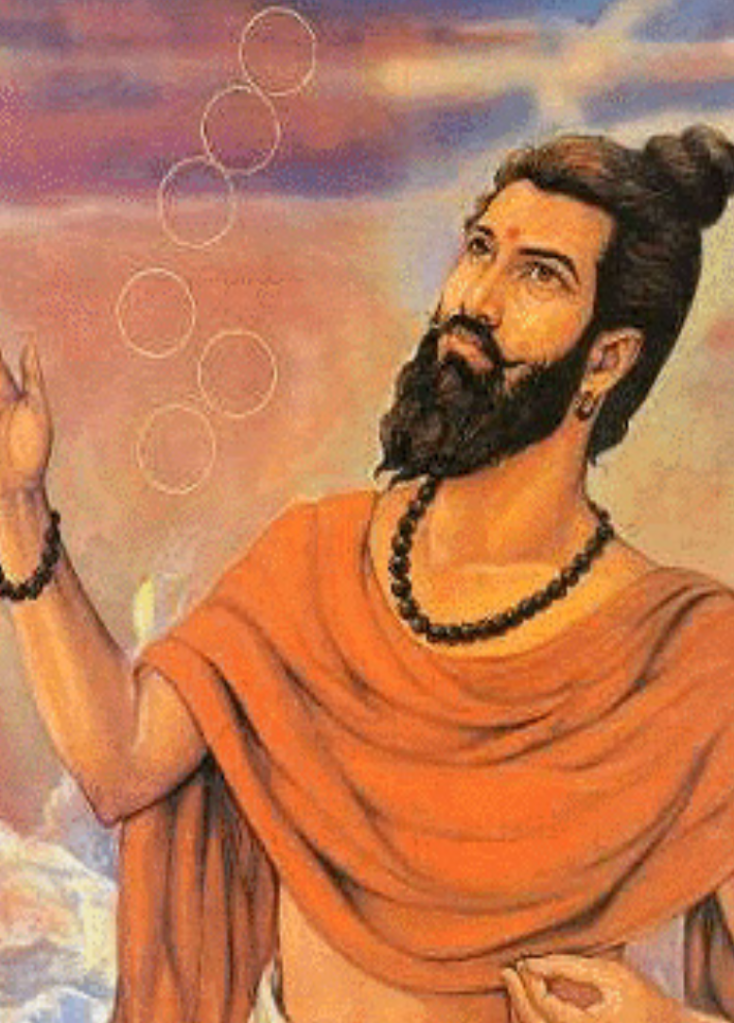
Moving onto the next great mind of our civilization, Rishi Kanada, we will explore his writings and his extraordinary brilliance in his professions (i.e. chemistry and physics). Rishi Kanada founded the Vaisheshika school, one of the Hindu schools mentioned at the beginning, and concerns itself with the properties of the physical world. Rishi Kanada is the author of two treatises, namely Vaisheshika Darshan and Vaisheshika Sutra. The scripture we will focus on is the Vaisheshika Sutra, in which different substances, their attributes, reactions, and genus are classified and described in great detail. It also describes the properties of atoms, how they form molecules, and how the entire material world is composed of these atoms. It describes different types of nonexistence, and finally properties of bodies and forces.
Isaac Newton is the scientist credited with the discovery of gravity and credited for his laws of motion. However, the very three laws of motion described by Newton and the concept of gravitation are elucidated in the Vaisheshika Sutra by Rishi Kanada, thousands of years before Newton!
Let us first define what are the three laws of Newton for some people who may not know:
Newton’s 1st Law: Every object stays in a state of rest or in uniform motion in a straight line unless acted on by another force, causing it to change its motion.
Newton’s 2nd Law: The mass, as well as the acceleration, of an object is directly proportional to the net force applied on it, the mass and acceleration of the body are inversely proportional, and the acceleration happens in the direction of the applied force.
Newton’s 3rd Law: For every action, there is an equal and opposite reaction.
Now, here are the laws of Rishi Kanada:
First Law: “वेगः निमित्तववशेषात किमणो जायत”. This translates to “change of motion is due to impressed force”.
Second Law: “वेगः निमित्तापेऺात किमणो जायते नियतदिक क्रियाप्रबन्धहेत” meaning “Change of motion is proportional to the impressed force and is in the direction of the force.”
Third Law: “वेगः संयोगववशेषववरोधी |” meaning “Action and reaction are equal and opposite.”
These findings are confounding, but there are more surprising descriptions and findings as well.
In the Vaisheshika Sutra, Rishi Kanada writes “उत्क्षेपणामवक्षेपणामाकुञ्चनं प्रसारणां गमनिमिति कर्म्माणि।” Here he defines five types of motions, namely utkshepanam (upward movement), avakshepanam (downward movement), akunchanam (contraction), prasaranam (expansion), and gamanam (horizontal movement).
He also writes “गुरुत्वप्रयत्नसंयोगानामुत्क्षेपणाम्।”. This translates to “Upward movement is the result of a combination of gravitation and external upward force.” This may seem confusing at first, so imagine that you throw a ball in the air. We know that there are three forces acting on it, namely gravity, upward force with which it has been thrown, and air resistance (which is negligible in the case of a ball). Rishi Kanada states that upward movement is the result of both forces, gravity, and the upward thrust with which it has been thrown. This completely factual and can be observed. Here, gurutva means gravity, prayatna means upward thrust, sanyoga means combination or confluence, and utkshepanam means upward motion.
He also writes “संयोगविभागवेगनां कर्म्म समानम्।”, meaning “if two bodies are compelled to collide or move away, the common cause is force”.
The next sentence is “न द्रव्याणां कर्म्म।” meaning “This force has to be external.”
Conclusion
To conclude this eye-opening article on the nature of ancient Indian science, I would like to say that even Western scientists have been drawn to Indian science and philosophy after realizing its profound implications on the nature of the universe and of existence, as a whole. In fact, there are striking parallels between the thoughts of Indic schools such as Vedanta and with the field of quantum mechanics. In other words, our ancestors have profoundly thought about the things quantum mechanics now compels us to think and devised a whole school of philosophy out of it. In fact, the three founders of quantum physics, namely Niels Bohr, Erwin Schrödinger, and Werner Heisenberg had extreme avidity for learning Vedic sciences and philosophies. I will share some quotes from some Western scientists regarding Vedic sciences and philosophies.
Niels Bohr, a Danish physicist credited with the discovery of the atomic structure of atoms said “I go to the Upanishads to ask questions.”
Even Erwin Schrödinger, a great Austrian quantum physicist said “Vedanta teaches that all consciousness is singular, all happenings are played out in one universal consciousness and there is no multiplicity of selves.”
Even Werner Heisenberg, a German physicist credited with the discovery of the uncertainty principle of quantum mechanics stated “After the conversations about Indian philosophy, some of the ideas of quantum physics that seemed so crazy suddenly made much more sense.”
Werner Heisenberg again said “Quantum theory will not look ridiculous to people who have read Vedanta.”
In fact, Werner Heisenberg had great knowledge of Sanskrit, despite being a German, and read the Bhagavad Gita in original Sanskrit, showing his avidity and fascination with Bharatiya science and philosophy.
Even Albert Einstein, who needs no introduction, had stated “When I read the Bhagavad Gita and reflect about how God created this universe everything else seems so superfluous.”
Erwin Schrödinger also made the claim “The unity and continuity of Vedanta are reflected in the unity and continuity of wave mechanics.”
In fact, the predictions of quantum mechanics that Bohr and Schrödinger discovered were in accordance with what was written in Vedanta.
Returning to Werner Heisenberg, he had a profound passion for Vedic philosophy that he even traveled to Bharat to speak with Shri Rabindranath Tagore on this subject.
This is proven by what Erwin Schrödinger said about Werner Heisenberg. He stated “I had several discussions with Heisenberg. I lived in England then [circa 1972], and I visited him several times in Munich and showed him the whole manuscript chapter by chapter. He was very interested and very open, and he told me something that I think is not known publicly because he never published it. He said that he was well aware of these parallels. While he was working on quantum theory he went to India to lecture and was a guest of Tagore. He talked a lot with Tagore about Indian philosophy. Heisenberg told me that these talks had helped him a lot with his work in physics, because they showed him that all these new ideas in quantum physics were in fact not all that crazy. He realized there was, in fact, a whole culture that subscribed to very similar ideas. Heisenberg said that this was a great help for him. Niels Bohr had a similar experience when he went to China.”
Erwin Schrödinger also made the proud claim “Most of my ideas and theories are heavily influenced by Vedanta.”
The American physicist Robert Oppenheimer stated “Access to the Vedas is the greatest privilege this century may claim over all previous centuries.”
The German quantum physicist Hans Peter Duerr made the incredible claim “Whenever I gave a lecture on quantum physics, I feel as if I am talking on Vedanta.”
Albert Einstein also claimed “We owe a lot to the Indians, who taught us how to count, without which no worthwhile scientific discovery could have been made.”
These astounding facts reveal that much of quantum theory and modern physics is derived from Vedic literature. If it were not for the Vedic culture, our knowledge and development in all areas of science would be incomplete and inchoate.
I hope after reading the facts in this article, all of you have a greater confidence in the scientific past, present, and future of Bharat. I will upload a Part 2 article later and I will continue making parts to reveal that even the most complex of sciences was mastered and practised with flawless expertise in ancient Bharat.
I would like to thank everyone for reading this article and I deeply encourage all of you to leave your thoughts, questions, and ideas regarding this subject in the comments section, which I will be happy to reply to.
Sources:
Project Shivoham
LimitLess
Sangam Talks – Nilesh Oak
Nilesh Oak MMC Itihas Manch
Surya Siddhanta
Origin of Laws of Motion (Newton’s Law): An Introspective
Study – AJER Research Paper by Avinandan Krishna Mandal
St. Andrews University Math History
Sanskriti Magazine
Quotations Sources:
Sanskrit-AI
Quotafancy
LibQuotes
PParivar
AZQuotes
Uplift
Tat Tvam Asi
Image Sources:
Indic Divinity
VedicFeed
MyHero
TheFamousPeople
columbia.edu
 Random Thoughts
Maharishi Patanjali is looked upon as the incarnation of Adisesha, the cosmic serpent upon whom Lord Vishnu reclines. The sage’s life is dated between 2nd and 4th century CE by most scholars.. while he wrote many books for example The yoga aphorisms of Patanj̃ali which consists of 196 aphorisms which are divided in samadhi pada that consist of 51 satras . Sadhana pada which consists of 55 sutras vibhuti pada which consists of &6 sutras kaivalya pada which consists of 34 pada the principles of yoga states that non voilence ((ahimsa) No killing other beings. …
Truthfulness (satya) Live in the truth. …
Righteousness (asteya) Not stealing, not cheating. …
Wisdom (brahmacharia) …
Simplicity (aparigraha) …
Worship of the spiritual goal (ishvara-pranidhana) …
Sacrifice the ego (shaucha) …
Self-discipline (tapas)
Rishi kanada
Rishi kanad was a ancient philosoper and Indian who founded visheshka school of Indian philosophy and he represents one of greatest work in physics he was also known as “father of atomic theory”
IT WAS RISHI KANADA WHO GAVE THE ATOMIC THEORY & TALKED ABOUT THE GRAVITY OF EARTH, 2600 YEARS BEFORE AN APPLE FELL IN FRONT OF NEWTON’S EYES:
Scientists of the modern world credit an English scientist John Dalton (1766 CE -1844 CE) for the Atomic Theory.
Kaṇāda’s system speaks of six properties (padārthas) that are nameable and knowable. He claims that these are sufficient to describe everything in the universe, including observers. These six categories are dravya (substance), guna (quality), karmana (motion), samaya (time), visesa (particular), and samavaya (inherence). There are nine classes of substances (dravya), some of which are atomic, some non-atomic, and others that are all-pervasive.
Rishi aetrya mahadisha
The only definite information about him comes from Chandogya Upanishad and Jaiminiya Upanishad, both of which mention that Mahidasa lived a long life of 116 years. It is said; the first 24 years of his life were spent as a student; the next 44 years as householder; the remaining 48 years as hermit or forest dweller free from illness and weaknesses.
3.4. Mahidasa compared the life of a person to a Yajna. According to him, the first 24 years of life are the morning libation connected with the Vasus. The next 44 years of life are the midday libations connected with the Rudras. And, the next 48 years are the third libation connected with the Adityas.
In nasa they measured distance between sun from earth which is 150 million
Basically
According to the calculation presented in Hanuman Chalisa
Distance between Sun and Earth = 12000 x 1000 yojanas = 96 million miles = 153.6 million kms, which is much closer to the calculation of the modern scientists.
While representing this the concluding states of distance between sun and moon
Which is 150 million kilometres
Distance = s/t
Speed = 150 million
150 = 1.1.5 × 108
Time = 1.3 sec
Which is 1.5/1.3
= Which is -1.15384615
Conclusion
This method can be wrong but hear to prove that s wrong or right .
LikeLike
Yes, you are correct and your research in very in-depth. Additionally, Rishi Kanada in his Vaisheshika Sutra also claims that there are nine dravyas, namely: Earth, water, fire, air, ether (sky), time, space, self, and mind. He described the properties of these substances, which are colour, taste, smell, touch, numbers, measures, conjunction and disjunction, priority and posterity, separateness or individuality, cognition or understanding, pleasure and pain, desire and aversion, and volitions. He claimed substances originate other substances, and attributes give rise to other attributes, but action cannot produce action. He wrote that substance cannot be destroyed by either cause or effect. Attributes are destroyed by both cause and effect. Action is opposed by its effect. he claimed that the combinative cause of attribute and action is the mark of substance. He used the reasoning that since volitions and cognition are not simultaneous, each organism can have one mind. He wrote that cause and effect do not have any similarity, and are distinguished from all other things, thus there is no unity and individuality within them. He writes that action is not the joint effect of many actions, due to the difference in their attributes. We can see, Rishi Kanada was a brilliant chemist and a physicist.
As for Hanuman Chalisa, yes it does mention the distance between Earth and Sun correctly, and is described in the shloka “जुग सहस्त्र योजन पर भानु |
लील्यो ताहि मधुर फल जानू॥” which translates to “You dashed upon the Sun, which is one yuga thousand yojanas away, thinking it to be a sweet fruit.” 360 solar days on Earth (one solar year) is equal to one day in Swarloka for the Devas. Thus 360 solar years on Earth, equals 1 year for the Devas. So yuga in this shloka refers to the length of a mahayuga in heaven. The length of a mahayuga in heaven is 12000 years. Then it is followed by sahasra meaning thousand. Then we have yojana which is a Vedic unit of distance approximately equal to 8 miles. So we multiply 12000*1000*8 = 96000000 miles. If we convert into kilometres, we obtain the value 153600000 kilometres. According to NASA, the distance between Sun and Earth is 152600000 km when sun is farthest from Earth. These values are very close, indicating ancient Bharat had advanced understanding and methods of astronomical and physical sciences.
LikeLike
Yaa correct
LikeLike